
Legal Empowerment
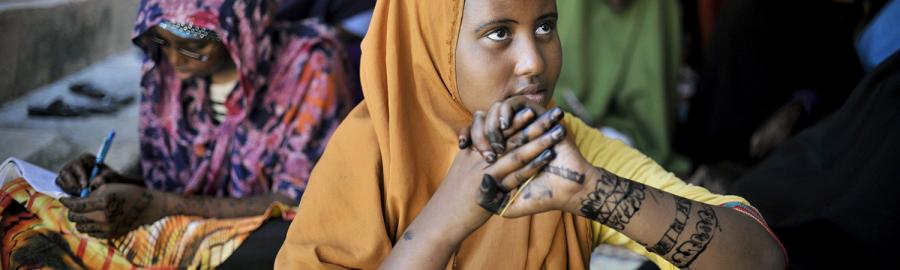
Rights mean little if those entitled to them are not aware they exist. Due process is of doubtful value when you are illiterate, or unable to understand the proceedings. Courts are next to worthless for those who cannot afford the bus fare to reach them. Nor should justice be about courts alone. For all these reasons, legal empowerment is crucial. Part of IDLO's bottom-up (or demand side) approach, it involves equipping people with the knowledge, confidence and skills to realize their rights. Even as we work to improve the functioning of justice systems, we strengthen citizens' capacity to press for justice from below.
The rule of law only exists to the extent that it works for all.
Brazil: City of God, City of Rights
Languages: English, Português

Sembrando Derechos en Paraguay
La Ministra de Justicia de Paraguay, Sheila Abed, el Viceministro de Justicia Ever Martínez y el Director de Acceso a Justicia, Weldon Black Zaldívar, presenciaron el acto de presentación de los avances en la orientación y asistencia legal a personas en situación de vulnerabilidad, en el marco del Proyecto Servicio de Orientación Legal (SOL)<

Mundos Encontrados: Promoviendo la Justicia Intercultural en el Perú
Durante los días 6 y 7 de noviembre se presentaron en Lima, Perú, los resultados del proyecto de acceso a la justicia llevado a cabo en el país por IDLO con el apoyo del Programa EUROsociAL II de la Unión Europea.

Supporting Access to Justice in Afghanistan (SAJA)
While the justice sector in Afghanistan has progressed since the fall of the Taliban in 2001, legal awareness and access to justice throughout the country are still lagging behind. A 2016 World Justice Project report found that only 23 per cent of Afghan citizens used the formal justice system to settle disputes, and less than half reported to have trust in the state courts. As a result, and combined with the pressure of social norms, potential justice users, particularly women, are deterred from using the formal system and are often unable to obtain fair remedies for grievances
Vídeo de IDLO llega a barrios vulnerables de Buenos Aires
El sábado 4 de octubre de 2014, los jóvenes que colaboran con los Centros de Acceso a la Justicia de Buenos Aires capital, presentarán en el Barrio Carlos Mugica (Villa 31), el vídeo titulado “No te cuelgues”, producido en el marco de un proyecto de acceso al derecho ejecutado por IDLO en colaboración con el Ministerio de Justicia argentino y financiado por la Unión Europea a través del Program

Argentina: Promoviendo el derecho a la educación
Algunos de los jóvenes que colaboran con los Centros de Acceso a la Justicia instalados por el Ministerio de Justicia argentino en las villas y barrios populares de Buenos Aires capital, recorrieron la semana pasada las calles de la Villa 31 informando a los vecinos sobre un festival que se realizará en el barrio el día sábado 4 de octubre de 2014.

Paraguay: Justice Where It's Most Needed
Earlier this year, climate justice advocate and former UN official Mary Robinson told IDLO that climate change exacerbated vulnerability and made access to justice even harder.
The truth of her words stares you in the face as you drive through the streets of Asunción.

Divulgación de derechos de población en condición de vulnerabilidad en América Latina | Promoting rights of vulnerable populations in Latin America
SAN JOSE, 25 de octubre del 2012 – El programa EUROsociAL II, y la Organización Internacional del Derecho para el Desarrollo, IDLO en calidad de socio operativo, organizaron un Taller Regional de Necesidades y Prioridades para la Divulgación de Derechos de Población en Condición de Vulnerabilidad en San José, Costa Rica.
Orientación y servicios legales para el acceso al derecho
Orientación y servicios legales para el acceso al derecho
Pages
Key Initiatives
-
 As part of IDLO’s continuous commitment to accountability and results-based management, IDLO is pleased to share this Evaluation Brief for the project, "Strengthening Linkages Between Formal Justice System and Traditional Dispute Resolution System to Improve Access to Justice - Phase II". The evaluation has been conducted by independent evaluation experts, supervised by IDLO’s Evaluation Unit.
 -
 As part of IDLO’s continuous commitment to accountability and results-based management, IDLO is pleased to share this Final Evaluation Brief (summarised evaluation report): “Supporting Access to Justice in Afghanistan (SAJA)”. The evaluation has been conducted by independent evaluation experts, supervised by <
 -
 As part of IDLO’s continuous commitment to accountability and results-based management, IDLO is pleased to share this Mid-Term Evaluation Brief (summarised evaluation report): “Supporting Access to Justice in Afghanistan (SAJA)”. The evaluation has been conducted by independent evaluation experts, supervised by IDLO’s Evaluation Unit.
 -
 As part of IDLO’s continuous commitment to accountability and results-based management, IDLO is pleased to share this Evaluation Brief for the project, "Enhancing the Capacity of the Legal Professional in Somalia for the Delivery of Justice". The evaluation has been conducted by independent evaluation experts, supervised by IDLO’s Evaluation Unit.

Latest Activity
 Policy Statements
|