International Development Law Organization

Mongolia

English

Since 2012, IDLO has partnered with Mongolia to strengthen the rule of law, expand access to justice and promote transparency and accountability. Working closely with government institutions, the judiciary and civil society, IDLO supports reforms to combat corruption, enhance judicial transparency, strengthen alternative dispute resolution (ADR) and improve protection systems for women, children and vulnerable communities. Mongolia became an IDLO Member Party in 2015 and currently serves as Vice President of the Assembly of Parties for the 2024–2027 term.

Our impact in Mongolia includes:

Strengthening anti-corruption frameworks, transparency and public trust. IDLO has enhanced the capacity of key institutions, including the Independent Authority Against Corruption, to prevent, detect and investigate corruption, including through improved systems for asset declaration review and mutual legal assistance. In parallel, support to civil society and media actors has promoted greater public engagement in justice sector reform efforts, contributing to the implementation of Mongolia’s National Anti-Corruption Programme (2023–2030) and reinforcing transparency, accountability and public confidence in justice institutions.

Expanding access to justice through alternative dispute resolution and legal innovation. IDLO has supported the reform of Mongolia’s Mediation Law and the development of a more robust and regulated ADR system, including the introduction of enforceable mediation agreements and strengthened accreditation mechanisms. A pilot court-based paralegal programme has also been introduced and expanded, improving access to justice for court users, while broader efforts promote the use of mediation as an efficient and accessible alternative to litigation.

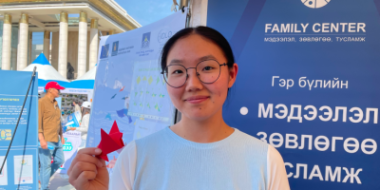
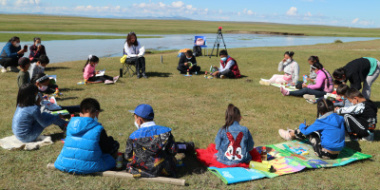
Strengthening protection systems for women, children and vulnerable groups. Through support to child protection frameworks and the national response to gender-based violence, IDLO has contributed to improved coordination, service delivery and reintegration mechanisms for vulnerable populations. This includes support for the rollout of Mongolia’s new Family and Youth Court and partnerships with civil society to deliver community-based and culturally responsive services across both urban and remote areas.
MONGOLIA: NATIONAL ASSESSMENT OF THE ENVIRONMENT, ACCESSIBILITY, SERVICE SCOPE, AND QUALITY OF ONE-STOP SERVICE CENTERS AND TEMPORARY SHELTERS IN MONGOLIA

This sub-project aims to strengthen Mongolia’s response to gender-based and domestic violence and provide survivors with improved access to protection services by conducting a comprehensive national assessment of One-Stop Service Centers (OSSCs) and temporary shelters that provide protection and support services to survivors.

MONGOLIA: SAFE: BUILDING EMOTIONAL RESILIENCE AND PREVENTING GENDER-BASED VIOLENCE (GBV) AMONG ADOLESCENTS AT RISK

This sub-project aims to work with at-risk adolescents to reduce recidivism, support successful reintegration, and promote the institutionalization of trauma-informed gender-based violence (GBV) prevention interventions within Mongolia’s juvenile justice system. The Christina Noble Children’s Foundation at Mongolia’s Rehabilitation Centre for Youth is adapting and delivering a GBV-sensitive Aggression Replacement Training (ART) programme to approximately 25 detained adolescents, while providing psychosocial support and engaging families to reinforce positive behaviours.

Pages

Key Initiatives

  • Strengthening the domestic violence response in Mongolia IDLO is implementing a project in Mongolia that aims to strengthen the response to domestic violence and increase access to justice for survivors. 
  • Domestic violence in Mongolia is increasingly recognized as a significant problem. Law enforcement officials report that in 2016 domestic violence cases increased by 25 per cent in the first seven months of the year compared to the previous year. In response, the Government of Mongolia has begun to take legislative and policy steps to improve its response to the issue. While important steps continue to be taken, significant challenges remain.
  • In recent years, following a growth spur which made it the fastest growing economy in the world, Mongolia has experienced rapid economic and social downturn. Although the years of growth yielded wealth and investment, the country was unable to prepare for a recession due to corruption, inflation, distortion of the local economy and environmental degradation. One of the key obstacles to sustainable growth and development is the weak and poorly prepared judiciary.
  • Mongolia’s rapid economic and social growth over the last few years is threatened by low-quality and unenforced court decisions. Despite a series of judicial reforms launched by the Government, Mongolia still lacks the legislative framework necessary to enforce court decisions or a strategy to address a growing caseload. Moreover, bailiffs’ inadequate legal knowledge and skills weaken the credibility and efficiency of the judiciary system and impede its proper functioning.
  • Despite having reached satisfactory standards of democracy and improved the respect for human rights, Mongolia faces some serious issues in addressing high levels of domestic violence against women. Mechanisms and services for protection of and support to victims of domestic violence are still very limited. A lack of training, procedural guidelines and inter-agency coordination between justice sector actors often creates obstacles for victims and hinders an efficient response to domestic abuse. 
Subscribe to RSS - Mongolia